
We’ve moved our newsletter platform to Beehiiv, so if this newsletter feels a little different, you’re not going crazy. To share this newsletter with friends, send them this link.
Stephanie Valdez was scrolling when she saw it: a post about a "multi-casualty incident reported" at a middle school.
She didn't reshare it. She paused.
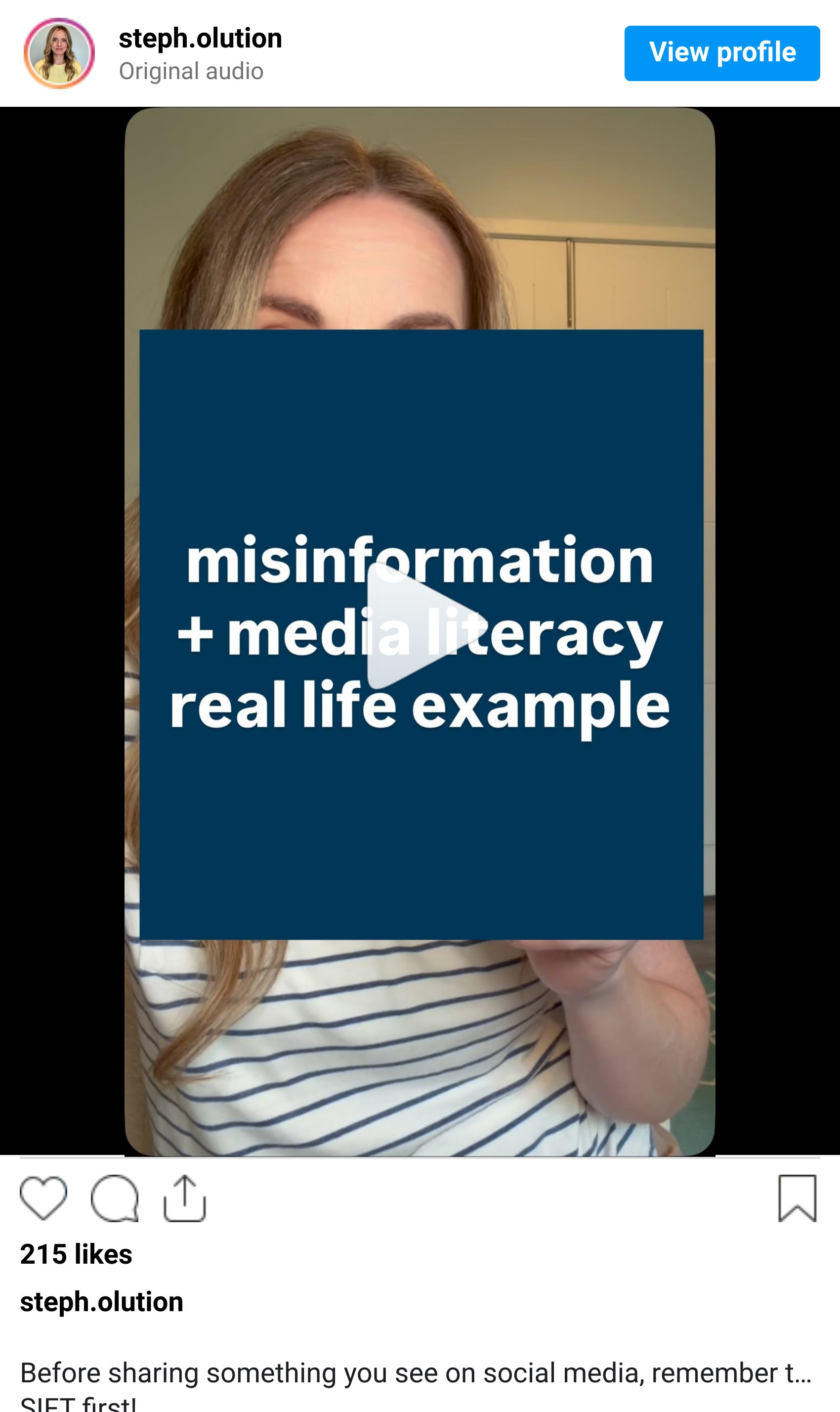
Most people would have either kept scrolling or hit repost. Stephanie opened a verification checklist in her head. She investigated the source. She searched Google for any other outlets reporting the same thing. She ran through the SIFT method — Stop, Investigate the source, Find better coverage, Trace the original context — the way we teach it in the Trusted Creator Fellowship.
And then she did something most fact-checkers can't do: She reached out to her contact at the school district.
Within minutes, she had the answer: a fire extinguisher had gone off. Emergency crews were on site checking kids out. Everyone was fine.
Stephanie didn't just avoid spreading misinformation — she was able to give her community accurate, specific, timely information in a moment when panic could have spread fast. And she could do that because she lives there. She knows people—an enormous advantage.
News creators tend to serve communities built around geography, shared interests, or demographics. If you're covering a place — a city, a region, a neighborhood — you're probably not the creator with the biggest following. But you may be the one with the most useful contacts, the most relevant context, and the fastest path to a verified answer. Audience size and community value aren't the same thing.
A few ways to think about building up your place-based work:
Map your beat. What are the topics and places you cover most? Who are the five people you'd call if something happened tomorrow? If you can't answer that, start there.
Introduce yourself before you need something. The worst time to build a source relationship is in the middle of a breaking story. Reach out to local officials, school communications staff, nonprofit leaders, and community organizers when there's no immediate ask. Tell them what you cover and who follows you. Most people are happy to be a resource when they understand the purpose.
Be the person who follows up. Sources remember creators who close the loop — who come back and say "here's what I ended up publishing, here's how the audience responded." That's how you go from a one-time contact to a trusted one.
Use your audience as a source network. The people following you are often the closest thing to a community tip line you have. Ask them questions. Invite them to share what they're seeing. Some of the best local stories come from someone in the comments saying "this is actually more complicated than that."
Stephanie's reel isn't just a good verification story. It's a demonstration of what community-embedded newsgathering can do that no national outlet or algorithm can replicate.
Creators, take our survey
Where do you get the information you use to keep your community informed? Do you have personal or firsthand experience because of your background or profession? Are you relying on news outlets or research papers for information? Do people in your community – online or otherwise – provide you with information to look into?
We want to better understand where you get your information and how you vet or verify the information you use.
What we’re reading
Global Investigative Journalism Network: Tips for Investigating Right-Wing Influencers and Podcasters
The New Yorker: The Rise of a Spanish-Language News Influencer
Washington Post: Introducing WP Creator
Creator Spotlight: On trust as a business model
Status: Chasing Creator Currency
P.S. I wrote a little bit about how I’m thinking about fundraising at NCC, and I’d love for you to tell me what you think. (Or donate 😀 )